
CapacitorsAvailable
Capacitor Code Calculator
Decode three-digit ceramic capacitor markings and tolerance letters into pF, nF, and µF values.
Calculator category
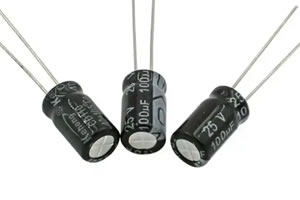
Capacitor calculators help engineers estimate timing behavior, frequency-dependent impedance, stored energy, and practical component values used in analog, power, and digital hardware design. They are useful for selecting capacitors during circuit design, checking filter assumptions, and troubleshooting timing or power integrity issues on PCBs.
Available Calculators
6
Engineering Applications
8
Each listed tool links to a working calculator with engineering inputs, formulas, examples, notes, and related resources.
Decode three-digit ceramic capacitor markings and tolerance letters into pF, nF, and µF values.
Calculate equivalent capacitance for dynamic series and parallel capacitor networks.
Calculate RC time constants and ideal charging or discharging reference voltages.
Calculate capacitive reactance and angular frequency from frequency and capacitance.
Calculate cutoff frequency, gain, attenuation, and phase for a first-order RC low-pass filter.
Calculate cutoff frequency, gain, attenuation, and phase for a first-order RC high-pass filter.
Choose the calculator that matches the decision you need to make: decode a component marking, size a value, check a frequency response, estimate loss, or verify a safety margin. A category page is useful only when it helps you reach a working tool, so this page lists released calculators only.
Calculator results depend on unit choices, idealized formulas, tolerance, temperature, frequency range, and component limitations. Review the formula and engineering notes on each calculator page before using the result in a schematic, BOM, or PCB layout.
Use the calculated value as a design reference, then confirm it against datasheets, derating curves, layout parasitics, measurement conditions, and manufacturer limits. The related guides below provide background when a calculation needs more context.
Support reference
Start with the calculator that matches the engineering question. Use the code calculator for markings, the series-parallel calculator for networks, the RC time constant calculator for timing, capacitive reactance for impedance, and the RC filter calculators for first-order frequency response.
They are ideal engineering estimates. Real capacitors have tolerance, DC bias effects, ESR, leakage, temperature drift, aging, ripple-current limits, and layout parasitics that must be checked against datasheets and measurements.
Capacitance units use SI prefixes. One microfarad equals 1000 nanofarads, so 0.1 µF equals 100 nF. Datasheets, BOMs, and capacitor markings often use different but equivalent units.
RC time constants are useful for first-pass estimates of charging, discharging, reset delay, switch debouncing, and simple analog timing. Compare the calculated voltage at time with the actual threshold used by the receiving circuit.
Check source impedance, load impedance, capacitor tolerance, signal amplitude, leakage, op-amp input effects if present, and layout parasitics. A first-order RC equation assumes ideal components and no unexpected loading.
Engineering Guide
Understand capacitance units, SI prefixes, microfarads, nanofarads, picofarads, common conversion patterns, and datasheet notation.
9 min · Beginner
Engineering Guide
Learn how to decode common capacitor markings, convert pF to nF and µF, understand tolerance codes, and verify capacitor values safely.
12 min · Beginner
Engineering Guide
Understand common capacitor dielectric types, including C0G/NP0, X7R, X5R, Y5V, Z5U, film, electrolytic, tantalum, and silver mica, and learn where each is best used.
13 min · Intermediate
Engineering Blog
Learn the most common capacitor selection mistakes involving dielectric type, voltage derating, ESR, temperature, polarity, and capacitance stability.
13 min · Intermediate
Engineering Blog
Compare ceramic and electrolytic capacitors, understand their strengths, weaknesses, ESR, voltage behavior, lifetime, and learn how to select the right capacitor for real engineering designs.
12 min · Intermediate
Inductor calculators for converter design, LC resonance, EMI filtering, RF circuits, and stored energy.
Open →Power electronics calculators for regulators, converters, thermal design, current estimates, and hardware margins.
Open →Use electronics conversion tools for frequency and period, AWG wire gauge, dBm and watts, hexadecimal, decimal, binary, and engineering workflows.
Open →