
TransistorsAvailable
BJT Base Resistor Calculator
Size base resistance for saturated transistor switching and GPIO drive.
Calculator category
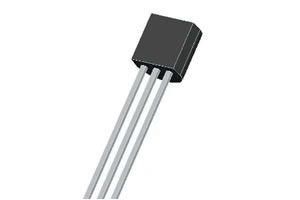
Transistor calculators support practical BJT switching, biasing, amplification, and thermal design. These tools help electronics engineers size base and emitter resistors, evaluate gain and saturation, establish stable operating points, estimate device power, and analyze common-emitter amplifier behavior.
Available Calculators
10
Engineering Applications
4
Each listed tool links to a working calculator with engineering inputs, formulas, examples, notes, and related resources.
Size base resistance for saturated transistor switching and GPIO drive.
Calculate current gain, collector current, or base current.
Analyze BJT switching current, saturation, drive margin, and load power.
Design BJT voltage-divider bias networks and operating points.
Calculate emitter resistance, current, voltage, and resistor power.
Estimate combined gain, base current, voltage drop, and drive power.
Check forced beta, base-drive margin, saturation, and switching power.
Estimate BJT or MOSFET loss, junction temperature, and thermal margin.
Estimate common-emitter gain, loading, bias point, and signal headroom.
Calculate BJT transconductance, emitter resistance, and loaded gain.
Choose the calculator that matches the decision you need to make: decode a component marking, size a value, check a frequency response, estimate loss, or verify a safety margin. A category page is useful only when it helps you reach a working tool, so this page lists released calculators only.
Calculator results depend on unit choices, idealized formulas, tolerance, temperature, frequency range, and component limitations. Review the formula and engineering notes on each calculator page before using the result in a schematic, BOM, or PCB layout.
Use the calculated value as a design reference, then confirm it against datasheets, derating curves, layout parasitics, measurement conditions, and manufacturer limits. The related guides below provide background when a calculation needs more context.
Engineering Guide
Learn how BJT transistors work, including NPN and PNP operation, cutoff, active and saturation regions, current gain, base current, VBE, VCE, power dissipation, packages, and practical circuit applications.
16 min · Beginner
Engineering Guide
Learn how to choose and bias a BJT transistor for switching and amplifier circuits, including base current, base resistor, forced beta, saturation, Q-point, power dissipation, thermal limits, and design margin.
18 min · Intermediate
Resistor calculators for circuit design, component selection, power dissipation, and hardware troubleshooting.
Open →MOSFET calculators for switching loss, conduction loss, gate drive, thermal checks, and power hardware design.
Open →Diode calculators for rectification, zener regulation, voltage drops, protection circuits, and power loss.
Open →