
LEDsAvailable
LED Resistor Calculator
Calculate current-limiting resistor value and recommended power rating.
Calculator category
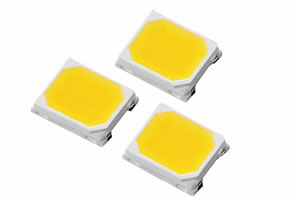
LED calculators support practical lighting and indicator design by helping engineers calculate current-limiting values, power dissipation, operating current, and component margins. These tools are useful for embedded hardware, front-panel indicators, LED strip design, and high-power lighting circuits where thermal and current limits must be checked.
Available Calculators
12
Engineering Applications
4
Each listed tool links to a working calculator with engineering inputs, formulas, examples, notes, and related resources.
Calculate current-limiting resistor value and recommended power rating.
Calculate LED operating current, resistor voltage drop, resistor power, LED power, and total circuit power.
Calculate LED power, supply power, resistor loss, and total circuit power for single LEDs, series strings, and LED arrays.
Calculate maximum LEDs in series, required resistor value, LED string current, voltage headroom, power, and efficiency.
Calculate branch current, resistor values, LED count, total power, and supply requirements for parallel LED arrays.
Calculate LED strip power, supply current, voltage drop, power injection, controller sizing, and battery runtime.
Calculate high-power LED junction temperature, heat dissipation, heatsink thermal resistance, thermal margin, and safe current.
Calculate LED driver efficiency, input power, output power, power loss, thermal rise, supply requirements, and annual energy use.
Calculate LED PWM duty cycle, average current, on-time, timer register values, gamma correction, resolution, switching loss, and dimming frequency.
Calculate separate resistor values, current, and power for red, green, and blue RGB LED channels.
Convert lumens, candela, and lux, and estimate luminous efficacy, beam angle, LED quantity, and lighting performance.
Convert LED CIE xy, uv, and u′v′ coordinates, estimate CCT and Duv, and compare white LED chromaticity points.
Choose the calculator that matches the decision you need to make: decode a component marking, size a value, check a frequency response, estimate loss, or verify a safety margin. A category page is useful only when it helps you reach a working tool, so this page lists released calculators only.
Calculator results depend on unit choices, idealized formulas, tolerance, temperature, frequency range, and component limitations. Review the formula and engineering notes on each calculator page before using the result in a schematic, BOM, or PCB layout.
Use the calculated value as a design reference, then confirm it against datasheets, derating curves, layout parasitics, measurement conditions, and manufacturer limits. The related guides below provide background when a calculation needs more context.
Engineering Guide
Learn how LEDs work and understand key LED characteristics including forward voltage, forward current, wavelength, color, luminous intensity, efficiency, LED types, packages, and applications.
14 min · Beginner
Engineering Guide
Learn how to choose the right LED by application, forward voltage, current, brightness, wavelength, color temperature, viewing angle, package, power, thermal behavior, and datasheet limits.
15 min · Intermediate
Engineering Blog
Avoid common PCB power and trace design mistakes including undersized traces, voltage drop, via bottlenecks, RMS-current errors, thermal issues, poor copper pours, and high-current layout problems.
24 min · Intermediate
Engineering Blog
Avoid common power design mistakes involving watts versus watt-hours, unit prefixes, RMS current, power factor, efficiency, derating, thermal design, startup current, voltage drop, and undersized components.
17 min · Intermediate
Engineering Blog
Avoid common LED design mistakes including missing current control, incorrect resistor values, excessive current, forward-voltage assumptions, resistor power errors, thermal problems, brightness comparison errors, and improper LED driving.
14 min · Intermediate
Resistor calculators for circuit design, component selection, power dissipation, and hardware troubleshooting.
Open →Diode calculators for rectification, zener regulation, voltage drops, protection circuits, and power loss.
Open →Power electronics calculators for regulators, converters, thermal design, current estimates, and hardware margins.
Open →